

Healthcare Cybersecurity as a Patient Safety Imperative
Cyber incidents in healthcare no longer stay confined to IT systems—they disrupt clinical workflows, delay treatment, and put patients at risk. As hospitals digitize care through EHRs, connected devices, and cloud platforms, attackers increasingly exploit gaps between rapid adoption and slower security maturity.
This article explains why healthcare is uniquely vulnerable, how cyberattacks translate into clinical harm, and which security strategies meaningfully improve resilience without obstructing care delivery.
Understanding the Patient Safety Impact of Cyber Incidents
What happens when a cyberattack doesn’t just crash systems, but forces an emergency department to divert ambulances, delays chemotherapy treatments, and leaves clinicians guessing about medication histories? That question stopped being hypothetical years ago. Today, cyber incidents in healthcare routinely spill out of server rooms and into exam rooms, operating theaters, and intensive care units.
Picture a large regional hospital on a Sunday morning. A ransomware payload detonates across shared Windows file servers and virtualized EHR backends. Within minutes, Epic Hyperspace workstations display error messages, pharmacy dispensing systems fall back to downtime mode, and clinicians print paper charts that haven’t been used daily in a decade. Radiology can’t retrieve PACS images, lab results arrive by phone, and patient throughput collapses. The IT team races to isolate subnets while clinical leadership scrambles to make care decisions with incomplete data. In this environment, cybersecurity stops being an abstract risk and becomes a direct patient safety event.
This shift reflects how deeply healthcare has digitized. Electronic Health Records such as Epic and Oracle Health Millennium anchor nearly every clinical workflow. Telehealth platforms like Teladoc and Amwell extend care beyond hospital walls. Cloud analytics environments process population health data, while AI-assisted imaging tools support diagnostics. At the same time, infusion pumps, patient monitors, and imaging systems quietly connect to hospital networks. Speed of adoption has consistently outrun security maturity, leaving gaps that attackers understand in detail.
Healthcare stands apart from finance or retail because downtime and data loss have immediate ethical and clinical consequences. A retailer losing point-of-sale systems loses revenue; a hospital losing EHR access risks medication errors, delayed diagnoses, and loss of life. That reality reframes cybersecurity from an IT cost center into a clinical risk management discipline.
This article equips healthcare leaders, security professionals, and clinicians to understand why modern cyber threats hit healthcare so hard, how the unique nature of healthcare data and devices drives risk, and which practical strategies actually improve resilience without slowing care delivery. We examine the threat landscape, the sensitivity and flow of healthcare data, tactics for securing EHRs and medical devices, and ways to align regulatory compliance with meaningful security outcomes.

Understanding the Modern Healthcare Cyber Threat Landscape
Why do attackers consistently choose hospitals and clinics over better-funded industries? The answer lies in the combination of data value, operational pressure, and expanding attack surface that defines modern healthcare environments.
Complete patient records sell for far more on underground markets than credit card numbers because they bundle identity data, insurance details, billing information, and clinical history in one package. A single EHR record often commands 10–20 times the price of a stolen card dump. Attackers also understand hospital operational realities: prolonged downtime forces administrators to consider ransom payments when patient care and revenue are at stake.
Initial access is rarely sophisticated. Threat intelligence reports from 2024 show that over 60% of healthcare ransomware intrusions began with compromised credentials rather than zero-day exploits. Common entry points include exposed Remote Desktop Protocol services, VPN concentrators lacking brute-force protections, and cloud email accounts without phishing-resistant MFA. In hospital environments, password reuse between EHR, VPN, and Microsoft 365 accounts allows attackers to pivot rapidly after one credential set is compromised.
Attack surfaces have grown quickly. Exposed VPN portals running outdated FortiOS versions, RDP services without MFA, telehealth platforms integrated via APIs, and thousands of unmanaged endpoints create abundant entry points. In one common pattern, attackers scan for internet-facing FortiGate appliances below FortiOS 7.0.6 using Shodan queries, exploit CVE-2023-27997, and drop a web shell that provides persistent access even after credentials are rotated. The compromise remains dormant until lateral movement is ready.
Phishing campaigns targeting clinicians are highly contextual. Adversaries scrape hospital staff directories and craft messages impersonating lab systems, HR, or credentialing platforms such as CAQH ProView. Emails with subject lines like “STAT pathology update – Action Required” redirect recipients to pixel-perfect Microsoft Azure AD phishing pages hosted on compromised WordPress sites. Successful credentials are immediately validated using tools like Evilginx to bypass MFA through token replay.
Lateral movement techniques follow predictable enterprise patterns. Once inside, attackers enumerate Active Directory using tools such as SharpHound, identify domain admin paths, and exploit misconfigured service accounts with unconstrained delegation. File servers backing EHR systems, often running Windows Server 2016 or 2019, become high-value targets due to their central role in clinical workflows. Backup servers and Veeam repositories are deliberately identified and deleted before ransomware deployment.
Double extortion is now standard. Ransomware families like LockBit 3.0, BlackCat, and Royal encrypt systems only after bulk data exfiltration using tools such as rclone or MEGA CLI. Healthcare-specific leaks now involve tens of terabytes of imaging data, scanned consents, and physician notes. Public leak sites are used as added pressure against executive leadership.
The supply chain widens exposure dramatically. Offices for Civil Rights breach investigations frequently trace incidents back to managed service providers or billing vendors. In one 2023 case, a compromised MSP RMM tool granted attackers administrative access to over twenty affiliated clinics, illustrating how one weak vendor control can cascade across multiple health systems.
The Nature of Healthcare Data and Why It Demands Special Protection
Why does a single healthcare data breach cause damage lasting decades rather than months? The permanence and richness of healthcare data sets it apart from almost every other industry.
Clinical records cannot be reset like passwords or reissued like credit cards. A diagnosis, genetic marker, or mental health note remains sensitive for a lifetime. EHR data merges identifiers, financial details, insurance numbers, and deeply personal clinical information. When stolen, it supports identity theft, medical fraud, prescription abuse, and targeted blackmail.
Healthcare repositories span a wide technical spectrum. Core EHR databases use relational backends such as Oracle 19c or Microsoft SQL Server clusters. PACS platforms store unstructured DICOM images, often exceeding petabyte-scale storage, with metadata embedded in image headers. Integration engines buffer HL7 messages in temporary directories that may persist for days if interfaces fail. Each repository introduces different encryption, access control, and logging challenges.
Data in motion is particularly exposed. HL7 v2 interfaces frequently rely on persistent TCP connections without native encryption, forcing organizations to wrap traffic in TLS tunnels or VPNs. When improperly configured, plaintext messages traverse internal networks. In breach investigations, packet captures have revealed social security numbers and diagnoses transmitted unencrypted between lab systems and EHRs.
A common failure scenario involves insecure file transfers. For instance, an SFTP service running OpenSSH 7.2 without key-only authentication allows password spraying. Attackers exfiltrate lab results uploaded nightly to partner organizations. Another frequent exposure involves publicly accessible imaging servers indexing PACS data due to misconfigured firewall rules or legacy NAT configurations.
Cloud storage misconfigurations remain a leading cause of exposure. In hybrid deployments, nightly EHR extracts pushed to Amazon S3 for analytics often inherit overly permissive IAM policies. Buckets missing “Block Public Access” settings or encryption at rest allow accidental exposure detectable by automated scanners within hours.
The downstream impact of breaches hits both patients and providers. Patients face delayed care, loss of trust, and long-term misuse of their identities. Organizations absorb regulatory penalties, breach notification costs exceeding $400 per record on average, and litigation while struggling to restore credibility.

Securing Electronic Health Record Systems Without Disrupting Care
How do you lock down an EHR system without forcing clinicians into unsafe workarounds? This tension lies at the heart of healthcare security.
Access control begins with precise role engineering. In Epic environments, organizations should enforce least-privilege templates that restrict high-risk activities such as chart break-glass access, mass report exports, or prescription overrides. Quarterly role audits using Epic Security Point Reports help identify privilege creep. Automated deprovisioning tied to HR systems ensures terminated clinicians lose access within minutes rather than days.
Authentication optimization reduces friction. Many hospitals deploy proximity badge-based SSO using Imprivata OneSign combined with Azure AD. Conditional access policies enforce MFA only when sessions originate outside trusted clinical networks or when accessing administrative functions. Badge tap-in, tap-out workflows cut authentication times from 30 seconds to under 5 while maintaining auditability.
API security requires dedicated controls. FHIR endpoints exposed to external partners should enforce OAuth 2.0 with short-lived tokens and client certificate validation. Interface engines such as Mirth Connect must run behind reverse proxies with Web Application Firewalls inspecting payloads for malformed segments. TLS 1.2 or higher should be enforced, and interface credentials rotated automatically.
Hardening the underlying infrastructure is equally critical. EHR servers should reside in segregated network segments with administrative access restricted via jump hosts. PowerShell remoting and SMB should be limited to specific management subnets. Logging from EHR databases, application servers, and interface engines should feed into a SIEM with correlations tuned for abnormal export volumes or off-hours access.
Resilience planning must align with clinical realities. Immutable backups using object-lock enabled S3 storage or hardened appliance-based repositories prevent attackers from deleting restore points. Organizations should conduct quarterly restore tests that include full Epic environment spin-up, validating both Recovery Time Objectives and clinician functionality. Downtime procedures and paper workflows should be rehearsed annually.
The Hidden Risks of Medical Devices and the Internet of Medical Things
What happens when a malware infection spreads from an imaging workstation to patient care devices? Connected medical devices introduce cyber risks with direct safety implications.
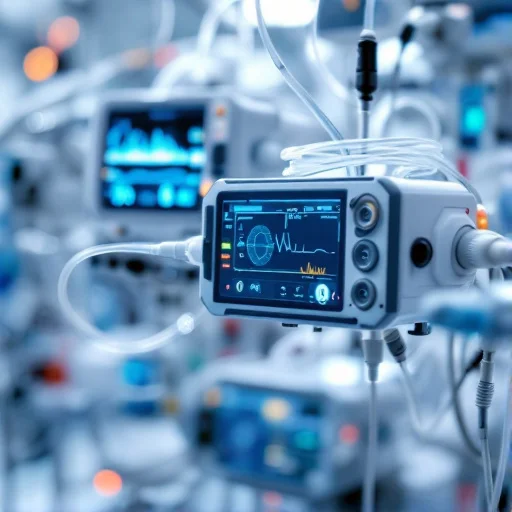
Many devices run legacy operating systems such as Windows 7 Embedded, Windows XP, or vendor-customized Linux kernels. Patching is constrained by FDA approval cycles and vendor validation timelines. Hospitals often operate thousands of devices with known vulnerabilities that cannot be remediated through traditional updates.
Effective defense begins with visibility. Passive discovery tools like Armis or Nozomi Networks fingerprint devices based on network behavior without active scanning that could disrupt clinical operations. Asset inventories must track firmware versions, communication protocols, and vendor support status.
Network segmentation mitigates exploit impact. Devices should reside in dedicated VLANs with strict east-west restrictions enforced by firewalls or software-defined networking. For example, infusion pumps may only communicate with medication management servers over specific ports. Microsegmentation using solutions like VMware NSX reduces lateral movement potential.
Monitoring device traffic for anomalies provides early warning. Baseline profiles detect deviations such as unexpected outbound connections, protocol misuse, or command sequences inconsistent with normal operation. In documented incidents, compromised imaging workstations attempted to beacon to command-and-control servers, detected through abnormal DNS patterns.
Regulatory Compliance and Its Practical Impact on Healthcare Security
Why do organizations pass audits yet still fall victim to ransomware? Compliance sets a baseline but does not equal security.
Regulations such as HIPAA, HITECH, and GDPR define categories of safeguards but stop short of prescribing technical architectures. HIPAA’s Security Rule requires access controls, audit logs, integrity protections, and transmission security, but leaves implementation decisions to covered entities.
Operationalizing compliance requires mapping each requirement to concrete controls. HIPAA access control requirements translate into enforced RBAC within EHRs, MFA on remote access, and automatic session timeouts. Audit control mandates become centralized log aggregation from EHRs, databases, and network devices with retention aligned to regulatory timelines.
Risk analysis obligations should drive continuous threat modeling rather than annual checklists. Organizations can align HIPAA risk assessments with NIST SP 800-30 methodology, evaluating likelihood and impact of scenarios such as ransomware locking EHR access during peak census periods. Findings should feed prioritized remediation plans with assigned owners.
Encryption requirements apply beyond laptops. Backup media, image archives, and cloud object storage must use AES-256 encryption at rest with managed key rotation. Transmission security means enforcing modern TLS configurations and disabling deprecated ciphers across interfaces and APIs.
Incident response readiness is a compliance requirement with operational consequences. Policies must be backed by rehearsed playbooks. Tabletop exercises simulating breach notification timelines, forensic preservation, and coordination with clinical leadership transform regulatory text into executable response.
Conclusion: Cybersecurity as Essential Clinical Infrastructure
Cybersecurity in healthcare now directly protects patient safety. Digital systems connect clinicians, data, and devices so tightly that cyber failures cascade into clinical harm.
- Start with a risk assessment focused on patient impact, prioritizing EHR availability and medical device safety.
- Deploy identity-centric controls such as adaptive MFA, RBAC reviews, and API security tuned for clinical workflows.
- Invest next in visibility: asset inventories, network segmentation, and monitored backups tested under real conditions.
Healthcare leaders and practitioners should evaluate their environments with a patient-safety lens, strengthen collaboration between IT, security, and clinical teams, and treat cybersecurity as essential clinical infrastructure. Protecting patients in a digital healthcare future demands nothing less.
Further resources: HHS Healthcare Cybersecurity Program, NIST SP 800-66, MITRE ATT&CK for Healthcare
Related Posts
All posts
Get your three regular assessments for free now!
- All available job profiles included
- Start assessing your candidates' skills right away
- No time restrictions - register now, use your free assessments later
- All available job profiles included
- Start assessing your candidates' skills right away
- No time restrictions - register now, use your free assessments later